AIAutomation
What AI is actually worth to a ten-person business
Not chatbots. The unglamorous back-office work that quietly eats your week, and how to hand it over safely.
The short version
For a small business, AI is not a robot that runs the company. It's a fast, tireless assistant for work that involves reading, writing and moving information around. Used on the right tasks, with a person checking the result, it gives hours back to people you already employ. Used on a messy process, it produces the mess faster.
Where it helps today
- Drafting. Quotes, replies to enquiries, follow-up emails and job summaries. AI writes the first version. A person corrects it and sends it.
- Reading documents. Pulling the numbers and names out of supplier invoices, purchase orders, forms and PDFs, so nobody has to retype them.
- Summarising. Call notes, long email threads and meeting recordings turned into a short list of actions.
- Answering from your own documents. Staff ask a question and get the answer from your procedures, price lists and past jobs, instead of interrupting the one person who knows.
- First-pass reports. The weekly numbers assembled and explained in plain English before you look at them.
One example from our own work: PDFEXcavator, built with Albe Engineering, pulls scale, tables and labels out of architectural PDFs automatically, using computer vision, OCR and a language model. It's the same pattern as everything above. Documents go in, usable data comes out.
Where it doesn't
- Decisions that need judgement. Who to hire, what to charge a difficult customer, whether to take the job.
- Anything sent to a customer unread. A confident, wrong email with your name on it costs more than the time it saved.
- Numbers you'll act on, unless they're checked against the source.
- A process nobody can describe. If the steps live in one person's head, write them down first. You can't automate what you can't explain.
How to start
- List the repetitive work. For one week, have each person note the tasks that are mostly reading, typing or copying.
- Pick one that happens often and has a clear right answer.
- Fix the process on paper first. Remove the steps that shouldn't exist before you automate the ones that should.
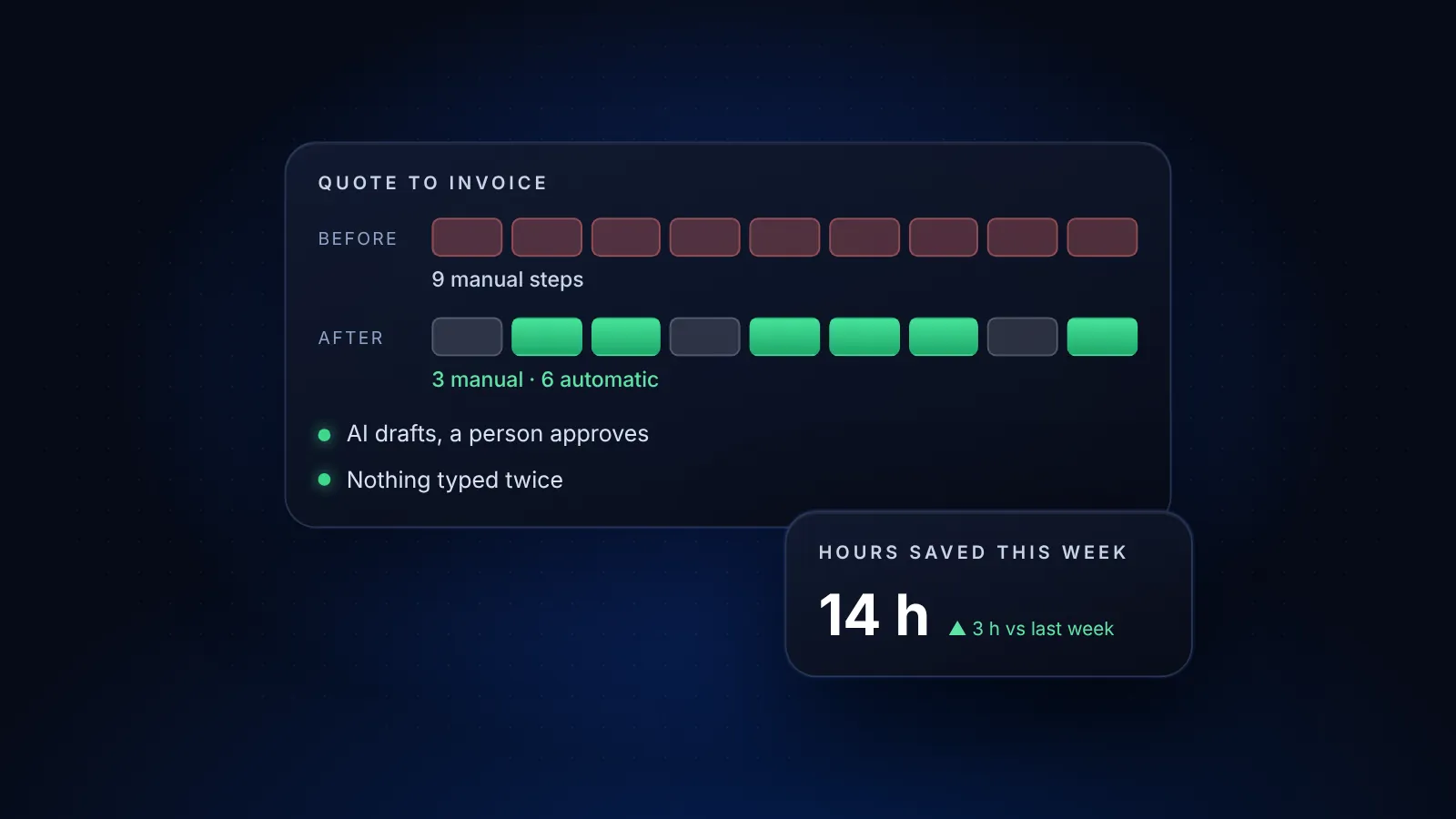
- Let AI draft, and keep a person approving. Stay that way until the corrections become rare and boring.
- Count the hours it gives back. If you can't measure it, it's a toy.
Two cautions
Your data. Don't paste customer or staff information into a tool until you know where that information goes and who can see it. Use tools on business terms, not personal accounts.
Your tools. You rarely need to replace the software you have. Most useful automation sits between the tools your team already uses.
Where to go next
If you want help finding the manual work in your business and handing it over safely, that is what we do in AI and Process Automation. We map the process first, automate the quick wins, and keep your people in charge of the result.